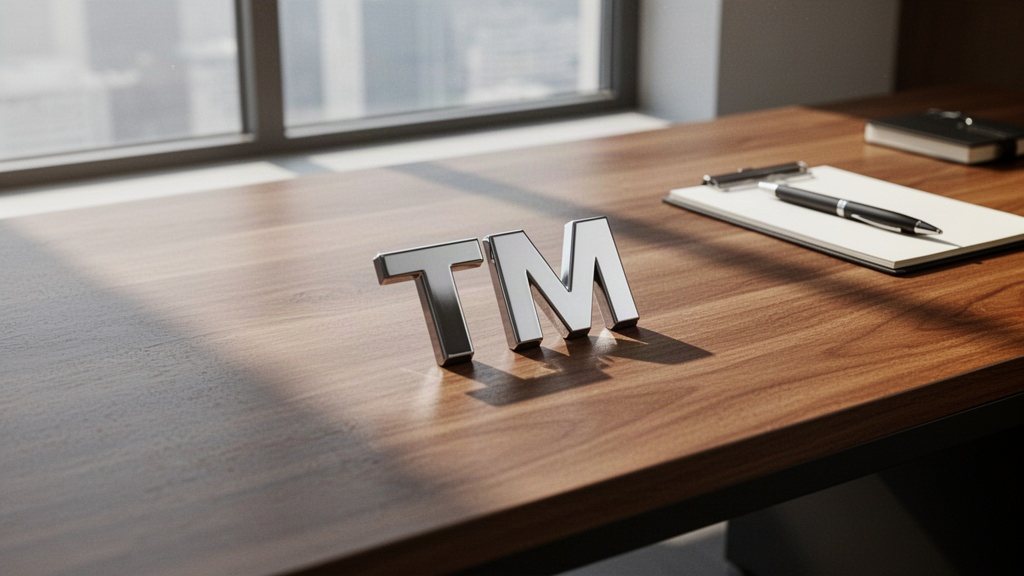
A trademark TM logo is one of the most direct signals a business can send to the market: this brand belongs to someone, and that someone is serious about protecting it. Whether you run a startup or an established company, the way you present your intellectual property shapes how customers, investors, and competitors perceive you. The ™ symbol alone can deter copycats, build consumer trust, and signal that your brand identity has real commercial weight. Many businesses underestimate how much legal positioning affects day-to-day credibility. Getting your trademark strategy right — from the first filing to long-term enforcement — is not a legal formality. It is a business decision with lasting commercial consequences.
Why Your Brand Identity Needs Legal Backing
A brand without legal protection is a brand anyone can copy. That sounds blunt, but it reflects a reality that small business owners discover too late, often after a competitor has registered a similar name or logo. Brand identity is not just a visual asset — it is a commercial signal that tells the market who you are and what you stand for. Without formal recognition, that signal can be replicated, diluted, or outright stolen.
The ™ symbol (as opposed to the ® symbol) indicates that a business is claiming rights over a mark, even before official registration is granted. This matters because it puts the market on notice. Competitors who see the ™ designation know that the brand owner is actively asserting ownership, which alone discourages infringement in many cases.
From a credibility standpoint, intellectual property protection signals maturity. Investors conducting due diligence on a company will look at whether key brand assets are protected. Banks, partners, and licensing prospects do the same. A business that has filed for trademark protection demonstrates that it thinks long-term about its assets, not just its next quarter.
Consumer psychology also plays a role. Studies in brand perception consistently show that shoppers assign higher quality and trustworthiness to brands that appear established and protected. The ™ or ® symbol next to a logo subtly reinforces that the product or service behind it is legitimate. That perception translates into purchasing decisions, repeat business, and word-of-mouth referrals. None of these outcomes require a massive marketing budget — they come from positioning your brand correctly from the start.
How to Register Your Trademark TM Logo Step by Step
The registration process varies by jurisdiction, but the core steps follow a recognizable pattern. In the United States, the United States Patent and Trademark Office (USPTO) handles all trademark filings. In Europe, businesses file through the European Union Intellectual Property Office (EUIPO). For international protection across multiple countries, the World Intellectual Property Organization (WIPO) administers the Madrid System, which allows a single application to cover dozens of markets.
Before filing, a clearance search is non-negotiable. Searching existing registered marks prevents costly conflicts down the line and gives you a realistic picture of whether your chosen mark is available. Trademark attorneys conduct these searches professionally, but the USPTO and EUIPO both offer free public databases for preliminary checks.
Here are the main steps involved in registering a trademark with the USPTO:
- Conduct a comprehensive trademark search using the USPTO's TESS database to identify conflicting marks
- Determine the correct international class of goods or services your mark will cover
- Prepare and submit your application through the USPTO's TEAS (Trademark Electronic Application System)
- Pay the filing fee, which currently ranges from approximately $275 to $375 per class of goods or services
- Respond to any Office Actions issued by the examining attorney within the required timeframe
- Complete the publication period, during which third parties may oppose the registration
- Receive your Certificate of Registration and begin using the ® symbol
The timeline from filing to registration typically runs between eight and twelve months for straightforward applications, though complex cases or oppositions can extend this significantly. During this waiting period, using the ™ symbol on your mark is both permitted and advisable.
Concrete Advantages That Go Beyond Legal Protection
Registering a trademark does more than protect a logo. It creates a tangible business asset that can be licensed, sold, or used as collateral. Franchises are built on this principle — the franchisor's registered marks are the foundation of the entire business model, generating royalty income without requiring direct operational involvement.
Brand valuation is another area where trademark registration makes a measurable difference. Around 50% of businesses that formally register their marks see their brand value increase by approximately 20% on average, according to available market data. That increase reflects the market's recognition that a protected brand carries lower risk and higher commercial defensibility.
Enforcement becomes significantly easier once a trademark is registered. A registered mark gives its owner the legal standing to pursue infringers in federal court, seek damages, and request customs authorities to block counterfeit goods at the border. Unregistered marks rely on common law rights, which are geographically limited and harder to enforce.
E-commerce platforms have also built trademark verification into their seller protection programs. Amazon's Brand Registry, for example, requires a registered trademark to access its full suite of brand protection tools. Without registration, businesses selling online have limited recourse against counterfeit listings that piggyback on their brand name. That gap in protection can directly affect revenue and customer satisfaction.
Filing Errors That Cost Businesses Time and Money
The most common mistake businesses make is selecting the wrong trademark class. The international classification system covers 45 classes of goods and services, and filing in the wrong class means your mark is not protected where it actually matters. A clothing brand that files only in class 25 (clothing) but also sells accessories may find its logo unprotected in class 14 (jewelry) or class 18 (bags).
Choosing a descriptive or generic mark is another frequent problem. The USPTO rejects marks that merely describe the goods or services they represent. "Cold Brew Coffee" cannot be trademarked for a coffee product because it describes the product itself. Marks that are distinctive — either invented words, arbitrary terms, or suggestive names — have a much higher chance of registration and stronger legal protection once granted.
Skipping the clearance search is a costly shortcut. Filing without checking for existing similar marks can result in an opposition from a prior rights holder, wasting both the filing fees and the time invested in building brand recognition around that mark. Trademark attorneys who specialize in IP law can identify conflicts that a basic database search might miss, particularly in cases involving phonetically similar marks or marks in related industries.
Failing to monitor and renew a trademark after registration is equally damaging. In the US, maintenance filings are required between the fifth and sixth year after registration, and again between the ninth and tenth year. Missing these deadlines results in cancellation. A trademark that lapses after years of investment is a preventable loss that proper administrative management would have avoided entirely.
Where Trademark Protection Is Heading
Trademark filings have been rising steadily. Data from recent years shows a 15% increase in global trademark applications, driven partly by the growth of digital commerce and the proliferation of direct-to-consumer brands. More businesses operating online means more brand names competing for recognition — and more potential conflicts.
Non-traditional marks are gaining traction. Sound marks, color marks, and motion marks are increasingly being filed and registered by major brands. The distinctive startup sound of a tech platform or the specific shade of orange associated with a luxury goods company can now carry registered trademark protection in multiple jurisdictions. This expansion reflects a broader understanding that brand identity extends well beyond a logo or wordmark.
Artificial intelligence is changing how trademark searches and monitoring work. AI-powered tools can now scan millions of existing marks across global databases in seconds, flagging potential conflicts with a precision that manual searches cannot match. These tools are becoming standard practice in trademark law firms and corporate IP departments, reducing the cost and time required for clearance work.
For businesses operating across borders, the Madrid System administered by WIPO continues to expand its reach. Filing a single international application that designates multiple member countries simplifies what was once a complex, jurisdiction-by-jurisdiction process. As more countries join the system and filing procedures become more standardized, international brand protection will become accessible to businesses of all sizes, not just multinationals with dedicated legal teams.