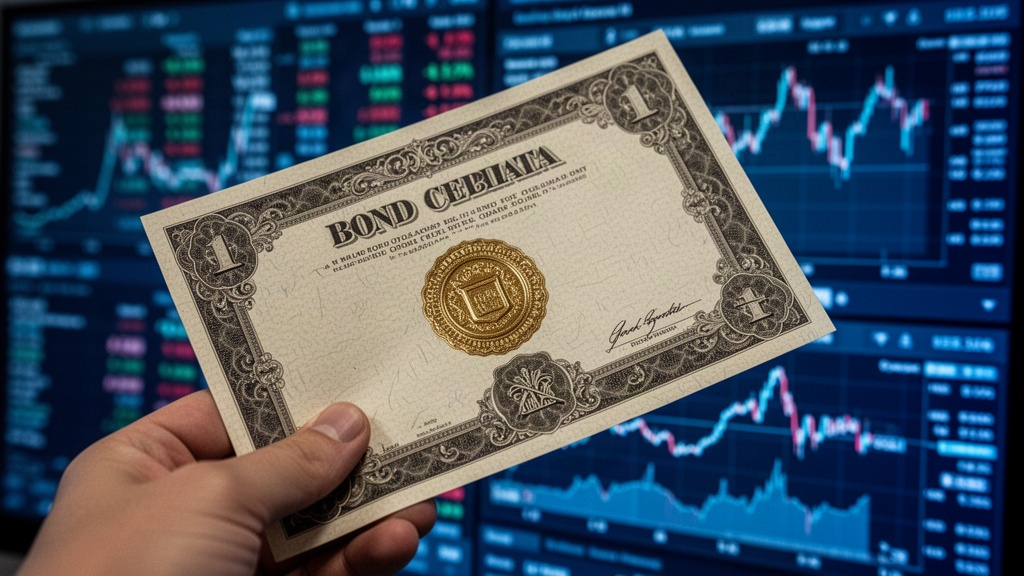
For anyone stepping into the world of investing, one question comes up almost immediately: what are the bonds, and how do they fit into a broader financial strategy? Bonds are debt instruments issued by governments or corporations to raise capital, promising to repay the principal with interest over a defined period. They sit at the opposite end of the risk spectrum from stocks, yet both are cornerstones of modern finance. Understanding the mechanics of each — how they generate returns, who holds the risk, and when one outperforms the other — gives investors a genuine edge. The U.S. bond market alone reached a staggering $10 trillion in value, underscoring just how central these instruments are to global capital flows. This guide breaks down both asset classes with precision.
What Bonds Actually Are and How They Work
A bond is a loan made by an investor to a borrower — typically a government or a corporation. The borrower agrees to pay back the principal on a specific date, called the maturity date, and to make regular interest payments in the meantime. These interest payments are known as coupon payments, and their rate is fixed at the time of issuance. A 10-year U.S. Treasury bond paying 4.5% annually, for instance, delivers predictable income regardless of what happens in the stock market.
Bonds come in several forms. Government bonds, such as U.S. Treasury bills and notes, carry the backing of the federal government and are considered among the safest investments available. Corporate bonds are issued by companies seeking to fund operations, acquisitions, or expansion without diluting ownership. Municipal bonds, issued by state and local governments, often carry tax advantages for U.S. investors.
The price of a bond on the secondary market moves inversely with interest rates. When rates rise, existing bonds paying lower coupons become less attractive, so their market price falls. This relationship is one of the most misunderstood aspects of fixed-income investing. A bond purchased at $1,000 face value might trade at $950 if rates climb, even though the issuer will still repay $1,000 at maturity.
Credit rating agencies such as Moody's Investors Service and Standard & Poor's assign ratings to bonds based on the issuer's likelihood of repaying the debt. Investment-grade bonds (rated BBB or higher by S&P) carry lower risk and lower yields. High-yield bonds, sometimes called junk bonds, offer higher returns to compensate for greater default risk. The Financial Industry Regulatory Authority (FINRA) provides public tools to help investors research bond offerings and understand pricing before committing capital.
Read also: Is a European Company Your Solution to Global Challenges
One often-overlooked feature of bonds is their seniority in a company's capital structure. If a corporation goes bankrupt, bondholders get paid before stockholders. This legal priority makes bonds structurally safer in distress scenarios, even when the issuing company is the same. That protection comes at a cost: bondholders don't share in the upside when the company thrives.
Bonds vs. Stocks: A Direct Comparison
Stocks and bonds differ at the most fundamental level: one represents ownership, the other represents debt. When you buy a share of stock, you become a part-owner of the company, entitled to a portion of its profits through dividends and to vote on corporate decisions. When you buy a bond, you are a creditor. The company owes you money, nothing more.
This distinction drives everything else — risk profiles, return potential, and behavior during economic cycles. Stocks in the S&P 500 have delivered an average annual return of roughly 7.5% over the past decade, adjusted for inflation. That figure, while attractive, comes with significant volatility. A portfolio of stocks can lose 30–40% of its value in a downturn, as seen during the 2008 financial crisis and the early months of the COVID-19 pandemic in 2020.
Bonds tend to hold their value better during market stress. When equity markets sell off sharply, investors often rotate into government bonds, pushing their prices up. This negative correlation between stocks and high-quality bonds is why financial advisors frequently recommend holding both. The mix dampens portfolio swings without sacrificing all growth potential.
Read also: Understanding the challenges of managing a restaurant chain
| Feature | Bonds | Stocks |
|---|---|---|
| Nature | Debt instrument | Equity ownership |
| Average Return | ~4.5% (U.S. Treasuries, current) | ~7.5% (S&P 500, 10-year average) |
| Risk Level | Low to moderate | Moderate to high |
| Income Type | Fixed coupon payments | Variable dividends |
| Liquidity | Moderate (varies by type) | High (exchange-traded) |
| Priority in Bankruptcy | Senior (paid first) | Junior (paid last) |
| Regulatory Oversight | SEC, FINRA | SEC, stock exchanges |
Liquidity also differs meaningfully. Most publicly traded stocks can be bought or sold within seconds during market hours. Bonds, especially corporate or municipal issues, trade over the counter and may take longer to sell at a fair price. U.S. Treasury bonds are an exception — they rank among the most liquid securities on the planet.
Why Bonds Belong in a Diversified Portfolio
Diversification is not just a theory — it is a measurable risk-reduction strategy. A portfolio holding only equities is fully exposed to market sentiment, corporate earnings cycles, and geopolitical shocks. Adding bonds to the mix introduces an asset class that responds differently to the same economic events. When corporate earnings disappoint and stocks fall, bonds often hold or appreciate, smoothing out overall portfolio performance.
The classic allocation model of 60% stocks and 40% bonds has guided institutional investors for decades. While some argue this model needs updating in a higher-rate environment, the underlying logic remains sound: stocks provide growth, bonds provide stability. Investors closer to retirement typically shift toward a higher bond allocation to protect accumulated wealth from a poorly timed market crash.
Bonds also serve as a source of regular income. Retirees and income-focused investors value predictable coupon payments that arrive semi-annually regardless of market conditions. A $500,000 bond portfolio yielding 4.5% generates $22,500 per year in interest — a meaningful supplement to other income sources. This income reliability is something stocks simply cannot match, given that dividends can be cut at any time.
Read also: Understanding Microsoft stock trends and market dynamics
Corporate bonds occupy a middle ground that many investors overlook. Investment-grade corporate bonds from established companies — think large-cap issuers rated A or above by Standard & Poor's — offer yields above Treasuries without taking on the volatility of stocks. They suit investors who want more return than government bonds provide but are unwilling to absorb the full risk of equity markets. The SEC regulates bond offerings and requires issuers to disclose material information, giving retail investors access to the same data as institutional players.
Navigating the Bond Market in a Shifting Rate Environment
Interest rates define the bond market's character more than any other single variable. After a prolonged period of near-zero rates following the 2008 crisis, the U.S. Federal Reserve aggressively raised rates starting in 2022. By 2025, U.S. Treasury yields averaged around 4.5%, a level not seen consistently since before the 2008 financial crisis. This shift dramatically changed the calculus for bond investors.
Higher rates mean newly issued bonds carry more attractive coupons. Investors who locked into low-rate bonds in 2020 and 2021 saw their holdings lose market value as rates climbed. This dynamic — often called interest rate risk — is the primary reason bonds are not risk-free, even when issued by the U.S. government. Duration, a measure of a bond's sensitivity to rate changes, becomes a critical concept here. A bond with a 10-year duration loses approximately 10% of its market value for every 1% rise in interest rates.
Short-duration bonds and Treasury Inflation-Protected Securities (TIPS) gained significant attention in this environment. TIPS adjust their principal value with inflation, protecting purchasing power in ways that traditional bonds cannot. Investors who understand these instruments can use them tactically, not just as a passive holding.
The bond market's scale — $10 trillion in the U.S. alone — means it influences everything from mortgage rates to corporate borrowing costs. When bond yields rise, companies face higher financing costs, which can compress profit margins and slow hiring. This interconnection between the bond market and the broader economy is why central bankers, corporate treasurers, and individual investors all watch it closely. Treating bonds as a passive, boring asset class misses how actively they shape financial conditions across the entire economy.